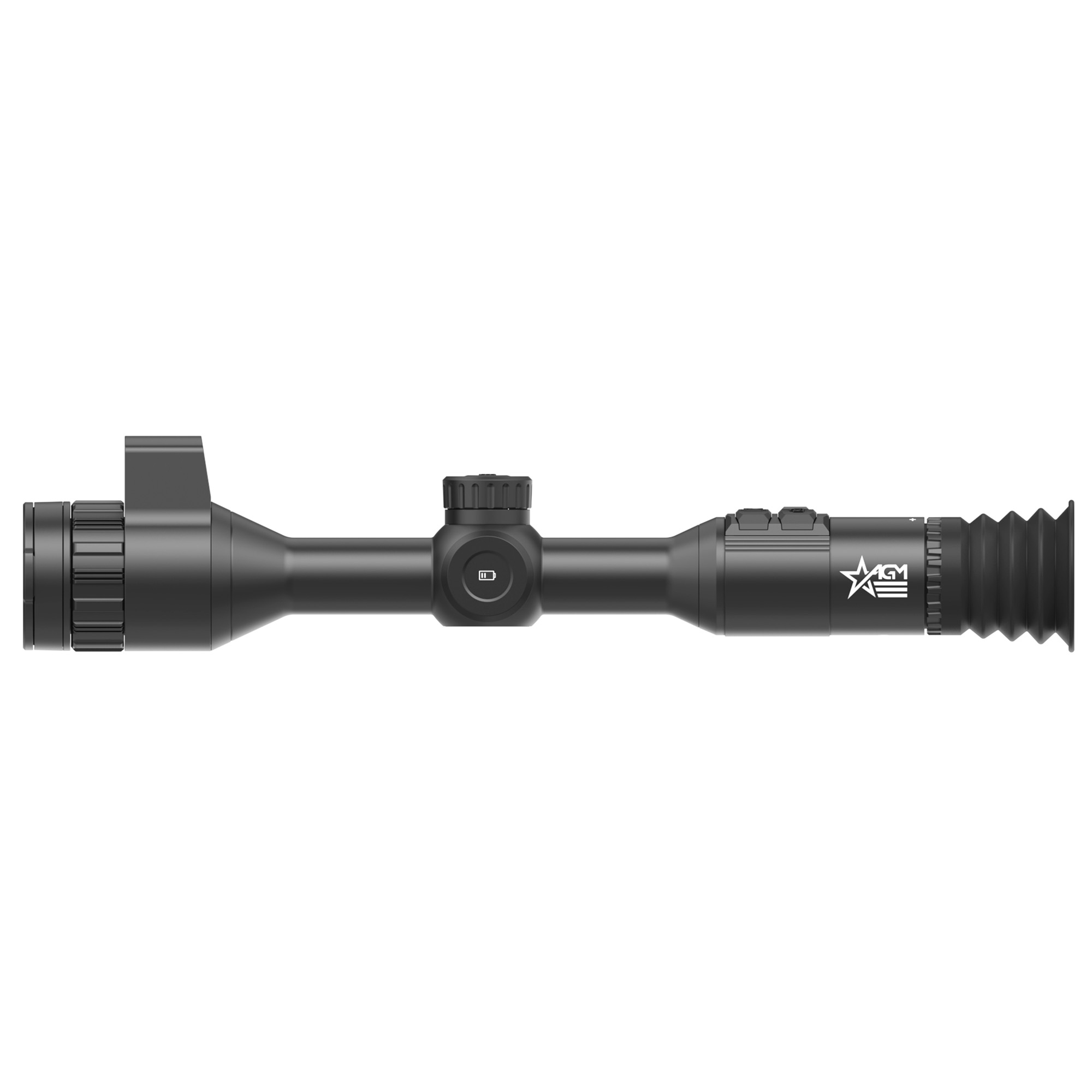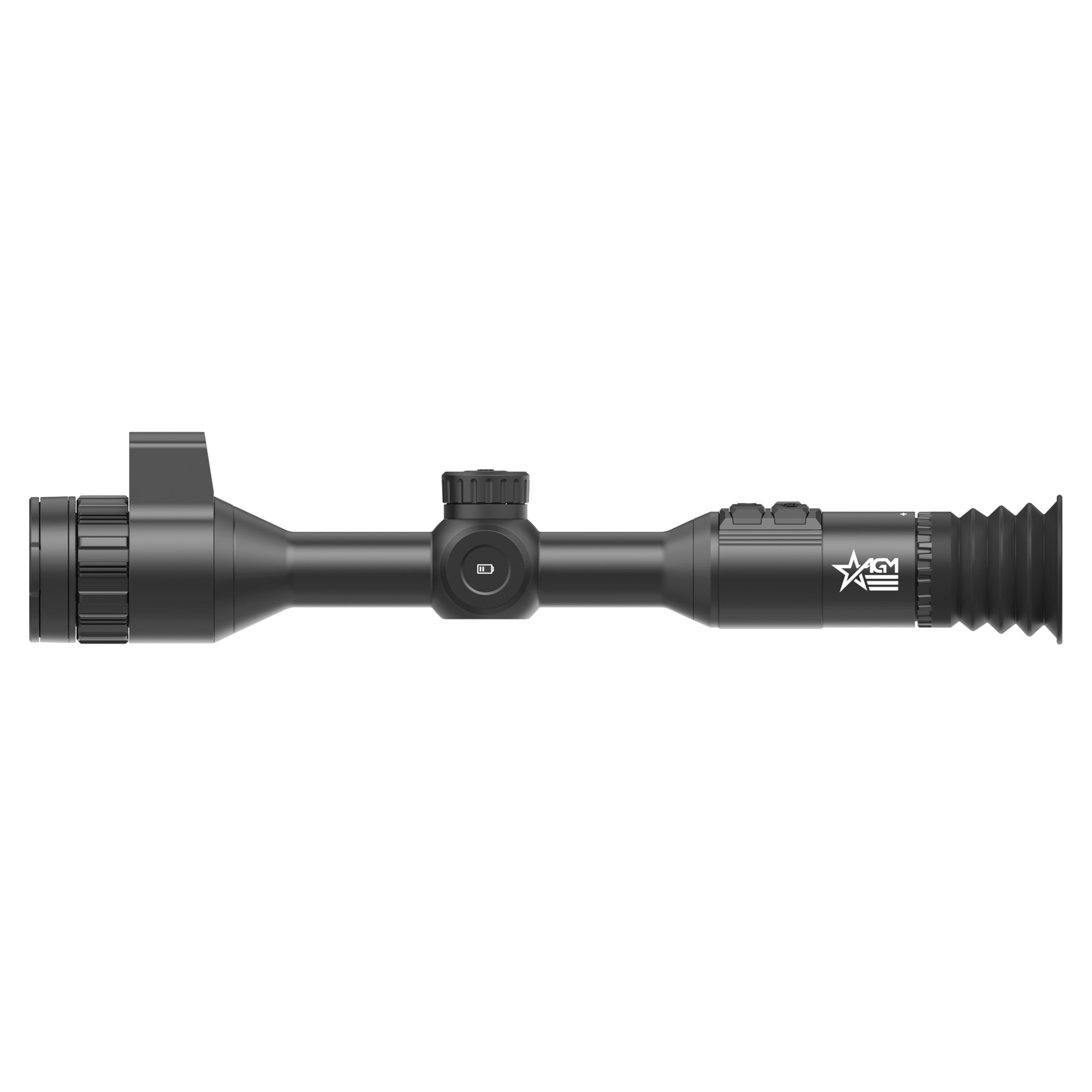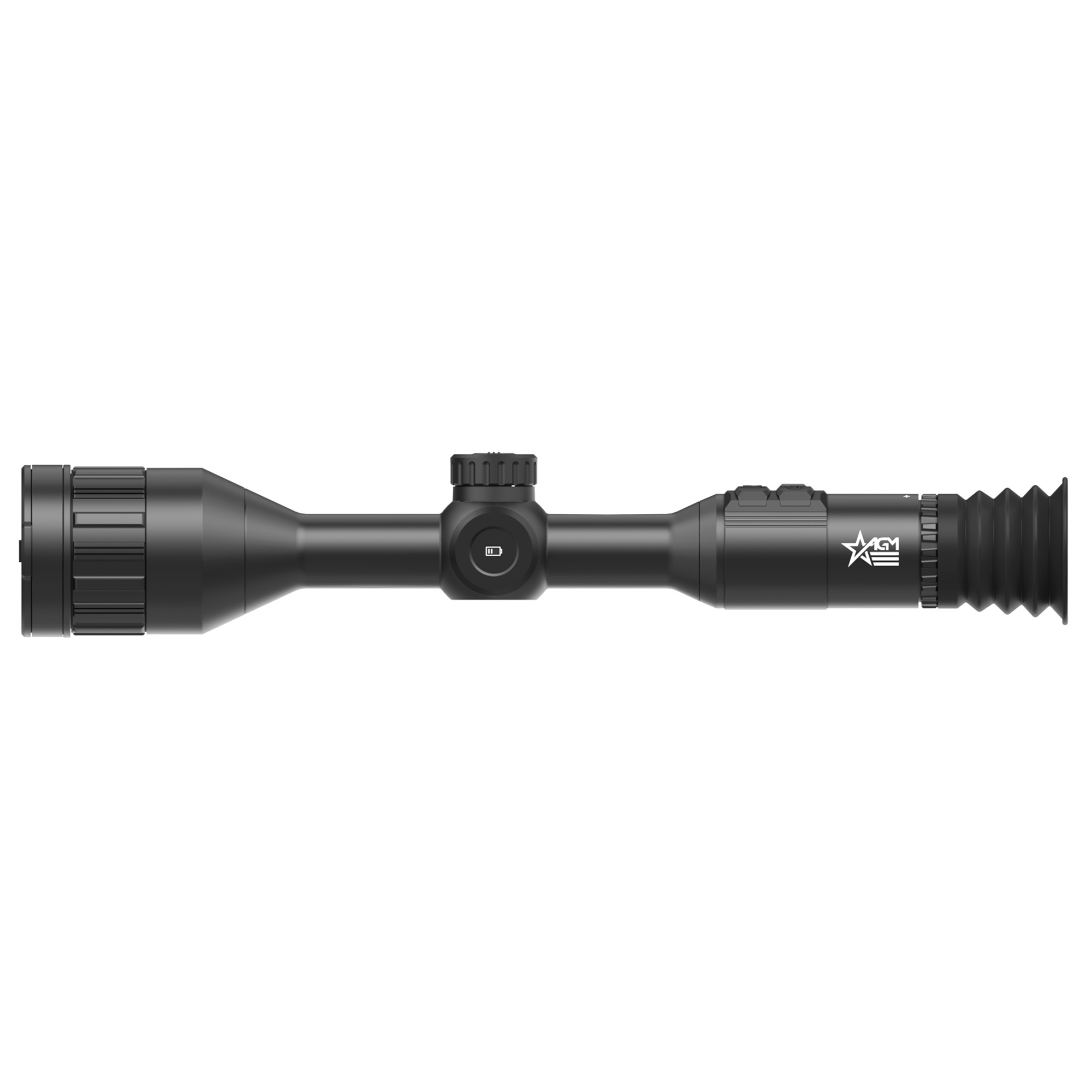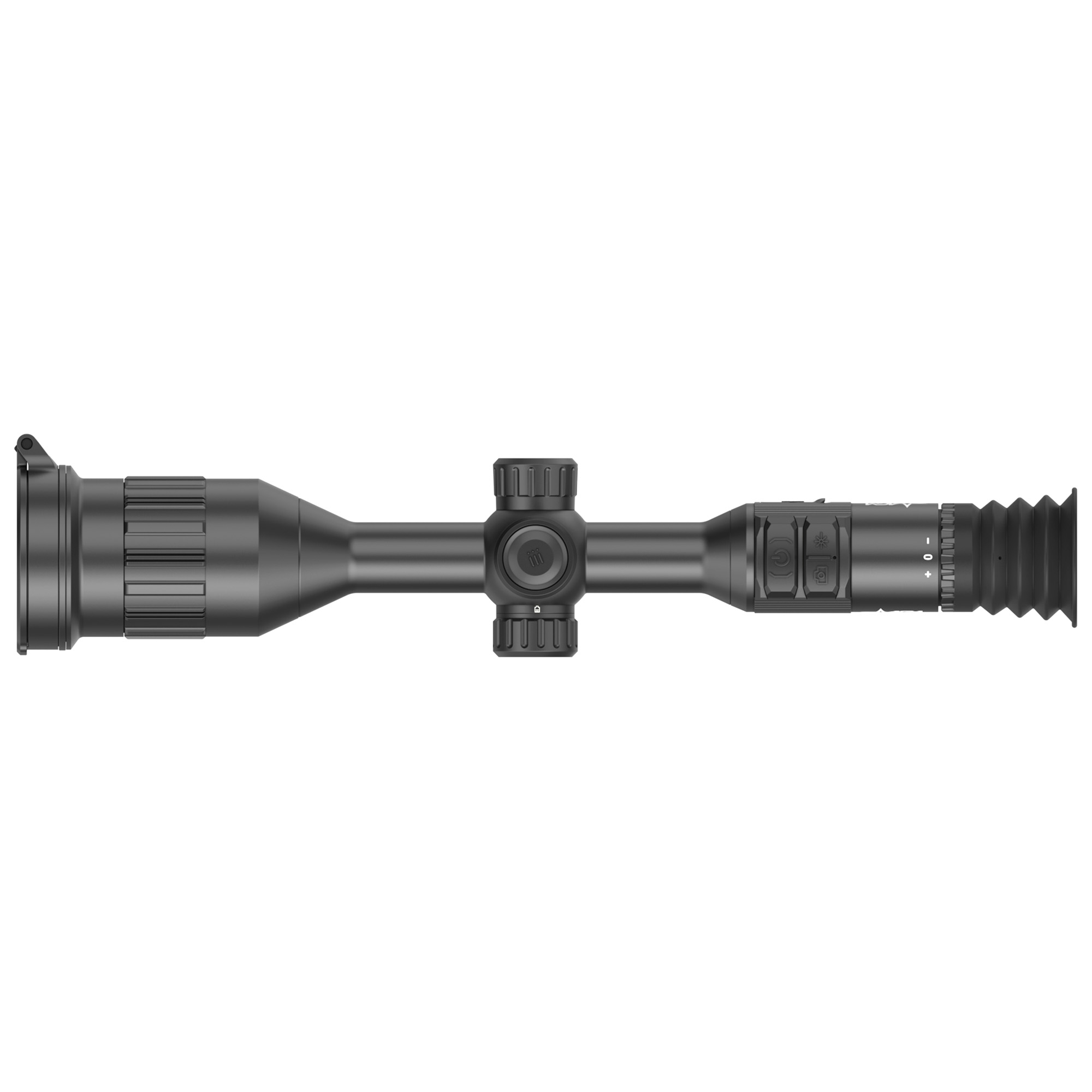
Thermal Scope With a Built-in Rangefinder
Many thermal and digital night-vision riflescopes are sold with a built-in laser rangefinder (LRF). That usually means the laser is part of the scope, or sometimes part of a weapon mount — not that a separate rangefinder comes in the box.
You can range a target without leaving the sight picture, and some scopes can pass that distance into an onboard ballistic calculator. The limit is just as clear: you cannot range a point without pointing the muzzle at it. Whether that tradeoff is acceptable depends on how you hunt, how you work a long-range target, or how you handle a rifle in a tactical setting.
What a built-in LRF is measuring
A laser rangefinder times a pulse of light to the target and back. A handheld unit or a binocular-LRF uses the same method; the difference is where the laser sits. For how that measurement works, and why the boxed maximum range is often optimistic, see Laser Rangefinders: How They Work and Max Range. The rangefinder only reports distance. It does not replace the thermal or digital image. A thermal LRF scope still forms an image from heat, not from reflected light the way a night-vision scope does. See Thermal vs. Night Vision.
You have to point the rifle to range
With an LRF built into the scope or a weapon mount, the laser is aimed with the optic and the barrel. Ranging a treeline, a berm, a steel plate, or an animal means the muzzle is pointed at that same place.
That is useful once you are already on the target and want a distance quickly. It is less useful when you only want a range — to a hillside, a backstop, or a landmark — without pointing a loaded rifle at it. Hunters sometimes range terrain before an animal appears. Long-range shooters often range targets or features around a firing point. In tactical use, muzzle discipline can rule out pointing the weapon at something solely to take a range.
A separate rangefinder avoids that constraint. A handheld unit or a binocular-LRF can be aimed independently of the rifle, then you get behind the gun. The cost is a second device and an extra step between ranging and the shot. The built-in design is faster once the rifle is already on the target: the range appears in the same sight picture, and on some scopes it can feed a holdover without a second tool in your hands.
What a built-in LRF does on current scopes
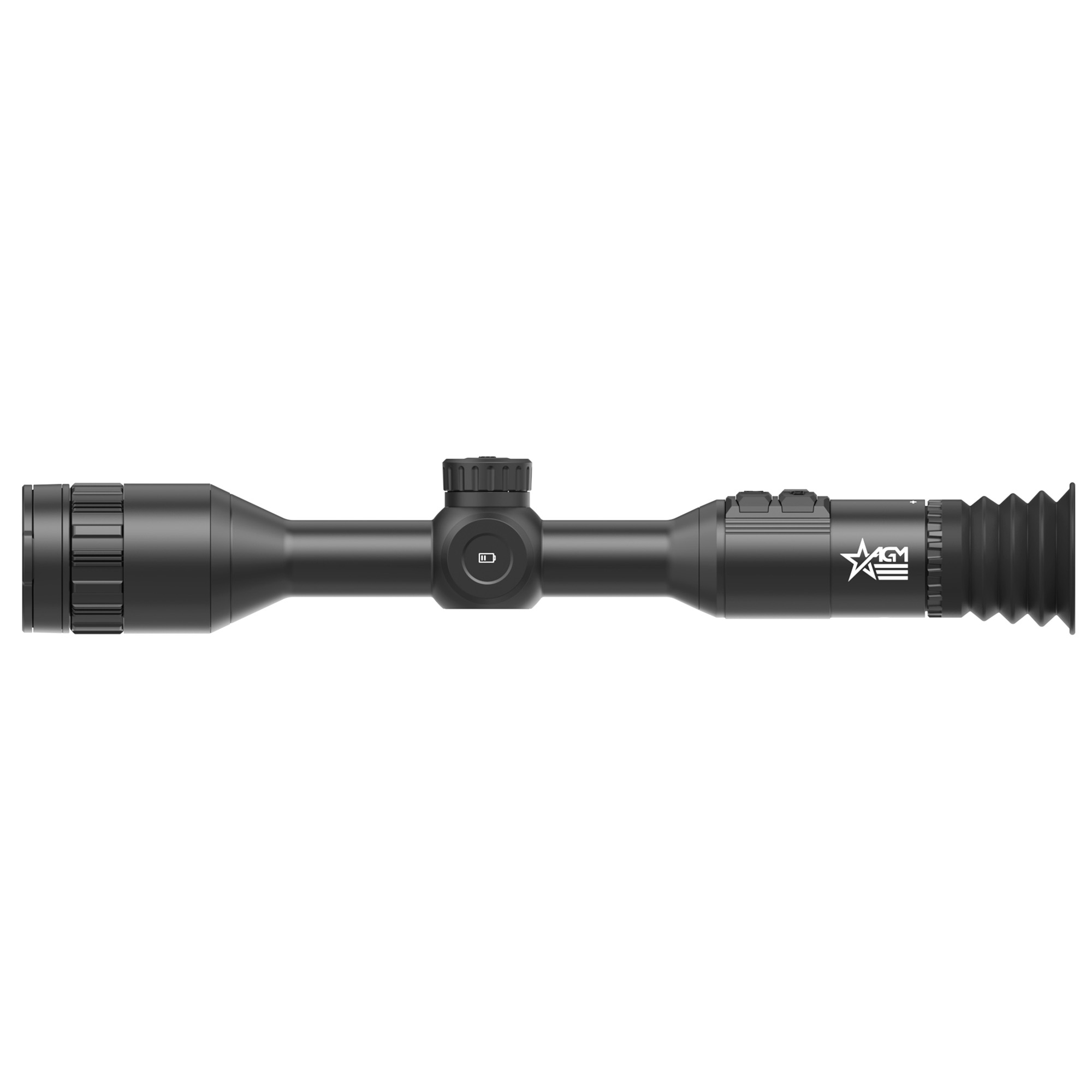
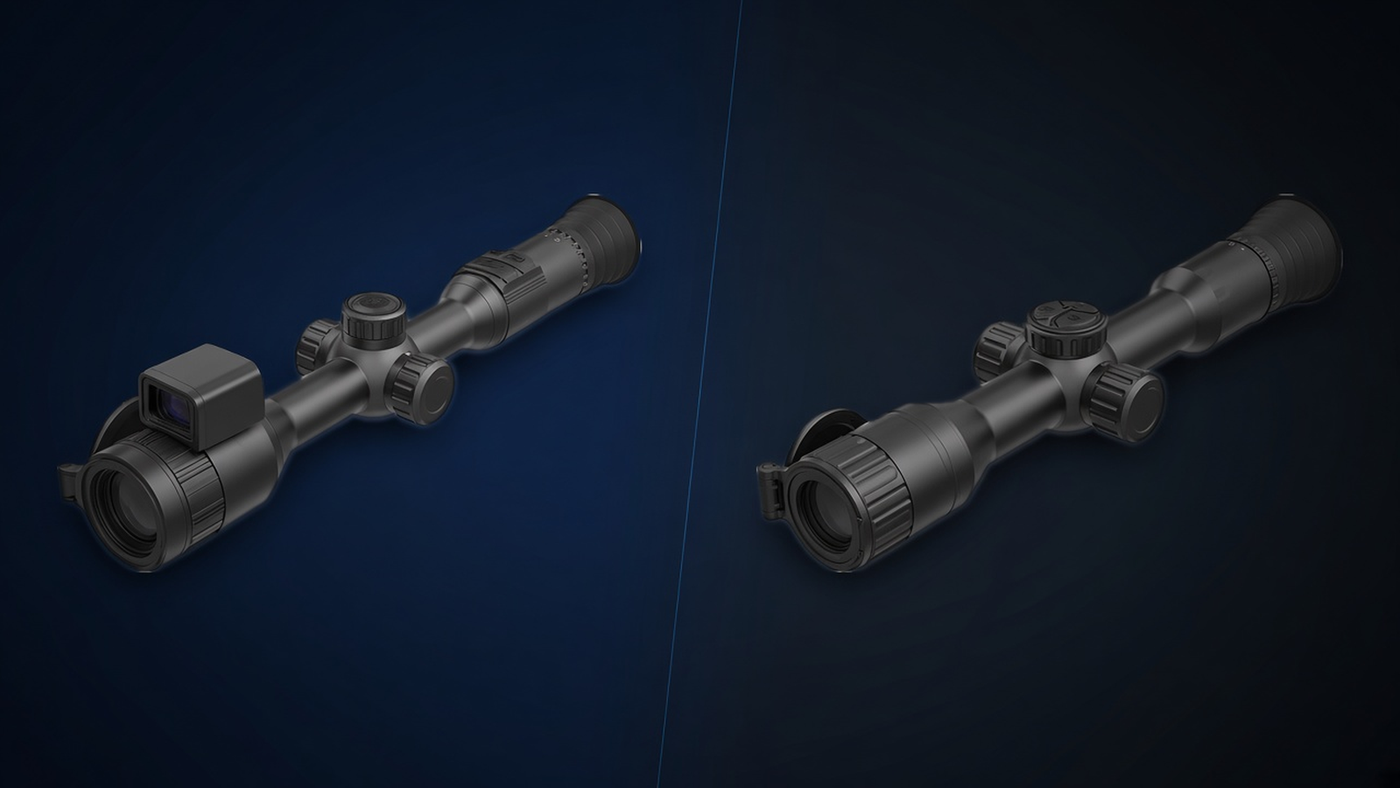
On AGM's Adder V2 LRF thermal riflescopes, the factory pages describe a fully integrated laser rangefinder paired with an onboard ballistic calculator. On the AGM Adder V2 LRF 35-640 and the AGM Adder V2 LRF 50-640, AGM calls that laser a fully integrated 1,000-yard rangefinder; the 50-640 page also says it is built into the front lens. On the AGM Adder V2 LRF 60-1280, the same manufacturer uses "1000 meter" wording instead of "1,000-yard." Those are AGM's ratings, not a promise of what every target will return, and should not be treated as the same number.
The AGM Adder V2 LRF 35-384 is sold as an LRF model — AGM lists it under LRF-integrated optics — but its official product page does not state a 1,000-yard or 1,000-meter laser range, so the other models' wording should not be applied to it.
In-stock Adder V2 LRF models:
- Adder V2 LRF 35-384: 384×288 sensor, 35 mm lens, 4×–24×.
- Adder V2 LRF 35-640: 640×512 sensor, 35 mm lens, 2.5×–24×; AGM rates the LRF at 1,000 yards.
- Adder V2 LRF 50-640: 640×512 sensor, 50 mm lens, 3.5×–26×; AGM rates the LRF at 1,000 yards, built into the front lens.
- Adder V2 LRF 60-1280: 1280×1024 sensor, 60 mm lens, 2.5×–28×; AGM rates the LRF at 1000 meters.
AGM also prints thermal detection ranges of 1800 m/yd for both 35 mm models, 2600 m/yd for the 50-640, and 3100 m/yd for the 60-1280. Those are thermal detection ratings, not laser-rangefinder ratings.
Built-in versus a separate rangefinder
How the laser is aimed
- Built-in LRF on the scope or mount: Aimed with the rifle. Ranging a point means pointing the muzzle at it.
- Separate rangefinder (handheld, binocular-LRF, or similar): Aimed independently of the rifle.
When you can range
- Built-in LRF on the scope or mount: Through that optic, and only when it is on the gun.
- Separate rangefinder (handheld, binocular-LRF, or similar): Anytime you have the unit, including before you get behind the rifle.
Speed on the target
- Built-in LRF on the scope or mount: Range, and on some scopes a hold, appear in the same sight picture.
- Separate rangefinder (handheld, binocular-LRF, or similar): Range with one device, then use the rifle.
Use with other optics
- Built-in LRF on the scope or mount: Tied to that scope or mount.
- Separate rangefinder (handheld, binocular-LRF, or similar): Works with more than one rifle, or with a scope that has no LRF.
Ballistic follow-through
- Built-in LRF on the scope or mount: On the Adder V2 LRF and Spectrum LRF 4K, AGM documents an onboard calculator after you range.
- Separate rangefinder (handheld, binocular-LRF, or similar): Depends on the separate unit, or on a weather/ballistic meter.
Cost and kit
- Built-in LRF on the scope or mount: Usually a higher-priced SKU in the same family; one less device to carry.
- Separate rangefinder (handheld, binocular-LRF, or similar): An extra device to buy, carry, and power.
HildiTech does not currently list a standalone laser rangefinder. The table compares the two arrangements, not a specific handheld model.
When a scope without a built-in LRF still makes sense
A built-in LRF usually costs more than a similar scope without one. If the scope is mainly for finding heat, or if you already use a handheld or binocular-LRF, a second laser in the optic may not be necessary.
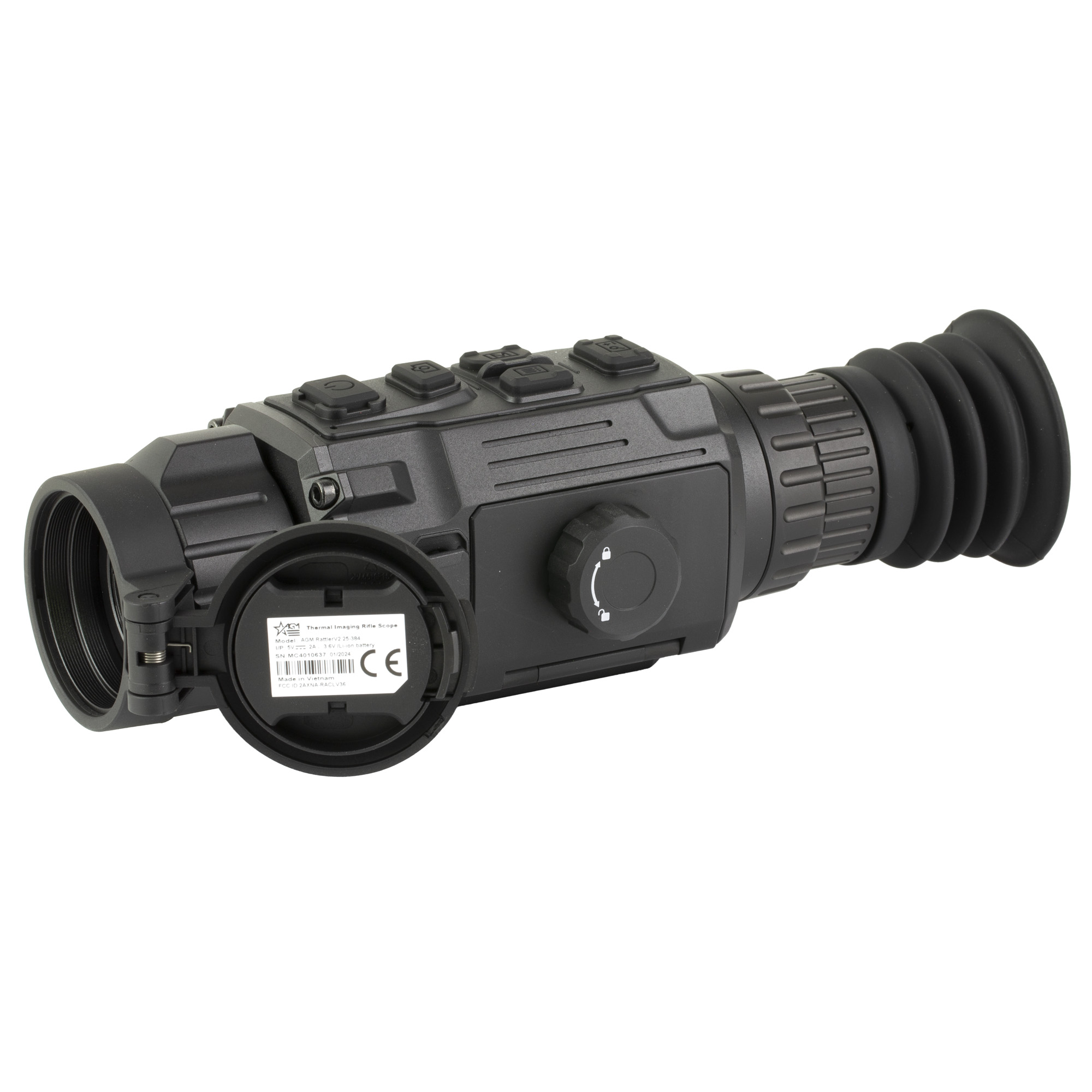
The in-stock AGM Rattler V2 25-384 is a 384×288 thermal riflescope with a 25 mm lens and 2×–16× magnification. AGM's official specifications do not list a built-in LRF, so ranging would be done with a separate unit.
Digital night vision with an LRF
The in-stock AGM Spectrum LRF 4K is a digital day/night scope, not a thermal and not a tube night-vision scope. AGM specifies a 3840×2160 CMOS sensor, a 1920×1080 OLED display, 3.5×–28× magnification, a 50 mm lens with an adjustable F1.2–F2.5 aperture, and an onboard ballistic calculator.
AGM's Spectrum page describes a 1,000-meter integrated laser rangefinder and, on the same page, also uses "1000yard" wording. Those phrases should not be collapsed into one number. AGM also says the LRF is meant to help with the lack of depth perception on a digital screen. That is a manufacturer claim about the use case, not a test result from HildiTech.
Angle compensation, and where a ballistic meter fits
On flat ground, the distance a rangefinder reports is the distance that matters for drop. On a slope — a steep hunt, a treestand, a shot from a ridge — the laser measures slant range, while gravity acts on the horizontal distance. Some rangefinders and some ballistic solvers compensate for that angle. That explanation belongs in Angle-Compensating Rangefinders, not here.
A weather and ballistic meter is not a rangefinder. It uses a distance you already have, plus conditions at your location. The in-stock Kestrel 5700 Elite with Ballistics Link is sold for that job. Kestrel's official page describes it as a weather meter with an Applied Ballistics solver, and states that LiNK-enabled units can be paired with LiNK-compatible laser rangefinders. For what the meter measures, see How a Kestrel Weather Meter Works for Shooting.
ITAR and shipping
Thermal and night-vision devices sold by HildiTech follow the same Compliance rules: shipping to the 50 states and Washington, DC only; no territories, APO/FPO, or international shipping. These devices are ITAR-controlled and cannot be exported without authorization from the US Department of State. They may be sold only to US persons, and they must remain in the United States. AGM's export policy is at agmglobalvision.com/pages/export-policy.