Laser Rangefinders: How They Work and What Actually Determines Maximum Range
A rangefinder is one of those tools that seems simple until you start digging into why the number on the spec sheet doesn't match what you're seeing in the field. Understanding the physics behind how these devices work — and what limits them — goes a long way toward buying the right one and using it correctly.
The basic physics
A laser rangefinder works on a straightforward principle: it emits a brief pulse of laser light toward the target, measures the time it takes for the reflected pulse to return, and calculates distance using the speed of light. The math is simple — distance equals the speed of light multiplied by the round-trip time, divided by two. Modern rangefinders do this calculation in milliseconds, typically with accuracy to within plus or minus one yard.
The laser used is infrared — invisible to the naked eye — and operates at a specific wavelength optimized for range and return signal detection. The receiver is tuned to the same wavelength and is looking for the return pulse against background noise.
Everything that affects real-world ranging performance comes down to one thing: how much of that laser pulse makes it back to the receiver. And there are several variables that determine that.
What the spec sheet range actually means
This is the first thing any serious buyer should understand: the maximum range printed on the box is almost always measured against a highly reflective target — think a road sign, a white panel, or a steel plate — under ideal atmospheric conditions. That number can be two to three times higher than what you'll actually get on a deer in the field.
Most manufacturers now list multiple range figures — reflective, tree, and deer — and those distinctions matter enormously. A unit rated for 1,500 yards reflective might only reliably range a deer to 800 yards under good conditions, and considerably less in poor light, heavy humidity, or at last light when the animal is backlit.
The practical takeaway: if you're buying a rangefinder primarily for hunting, look at the deer or animal range figure, not the headline number. If you're a long range shooter who primarily ranges steel, the reflective figure is more relevant — but understand it assumes a plate that's face-on and large enough to intercept the beam.
The variables that determine real-world maximum range
Target reflectivity
This is the dominant variable. Reflectivity is determined by color, surface texture, and material. Bright, smooth, hard surfaces — steel, white paint, glass — return far more of the laser pulse than dark, soft, or rough surfaces.
Game animals are consistently poor reflective targets. Dark fur, textured coats, and the irregular surface of an animal's body absorb and scatter laser energy. A dark-colored deer or a black bear against a shadowed background is one of the harder targets a rangefinder will face. By contrast, a whitetail's white belly or a pronghorn's white rump patch will return a stronger signal than the animal's body.
Steel plates for target shooting fall in the high-reflectivity category, but with a caveat: target size and beam divergence interact at distance.
Target size and beam divergence
Laser beams are not perfectly parallel — they spread slightly over distance, a property called beam divergence. This is typically measured in milliradians and is stated in some product specs.
At long ranges, the beam footprint on the target can be larger than the target itself. When that happens, a portion of the laser energy misses the target entirely and returns no signal. A full-size deer at 500 yards presents a large enough target that beam divergence usually isn't a limiting factor. An 8-inch steel plate at 800 yards is a different story — even though steel is highly reflective, a small plate at long range can return a weak signal or no return at all, depending on the beam divergence of the specific unit.
This is worth understanding for long range shooters running smaller steel: ranging a 6-inch or 8-inch plate reliably at 600+ yards requires a rangefinder with tight beam divergence, not just high rated range. A unit with a rated reflective range of 1,500 yards does not automatically range a small plate at 1,000 yards.
Plate angle matters too. A steel plate tilted slightly away from the rangefinder scatters the return — a face-on plate is a very different target than one angled even 10 degrees away from perpendicular.
Atmospheric conditions
Air isn't a perfectly transparent medium for laser light. Several atmospheric factors reduce effective range:
Humidity and precipitation. Water vapor absorbs and scatters laser energy. Heavy humidity, rain, fog, and mist all reduce effective range. Light rain has a modest effect; dense fog can cut range dramatically. This is particularly relevant for early morning hunting in humid climates — your rangefinder will perform measurably worse in thick morning fog than in dry midday air.
Dust and smoke. Particulates scatter laser energy similarly to water vapor. Ranging through dusty terrain or across a smoke-affected landscape degrades performance.
Bright sunlight and thermal shimmer. Infrared solar radiation adds background noise that the receiver has to work against. Most rangefinders work reliably in direct sunlight, but performance at the far edge of the device's capability is better in low light. Thermal shimmer — heat mirage rising from the ground — can cause inconsistent returns at long range by deflecting the beam path slightly.
Time of day. There's a reason many rangefinders perform best in the early morning and evening hours. Lower sun angle, reduced thermal activity, and lower background infrared noise all contribute to better signal-to-noise ratio at the receiver.
Steady hold
A rangefinder that's moving during the measurement cycle will get an inconsistent or failed return. At moderate distances this usually isn't an issue. At the limits of a device's capability — long range, small target, marginal atmospheric conditions — a rock-steady hold is the difference between getting a reading and getting nothing. Using a tripod, a shooting rest, or bracing against a tree is legitimate technique for ranging at distance, not overkill.
Realistic expectations by target type
To put all of this into practical terms, here's what to expect from a quality mid-range to premium hunting/shooting rangefinder in real field conditions:
Steel plates (target shooting):
- Large plates (18"x24") at practical ranges (up to 600-800 yards): generally reliable with any quality unit
- Medium plates (12"-15") at 600-1,000 yards: requires a quality unit with good beam divergence specs; face-on angle matters
- Small plates (6"-8") at 800+ yards: demands a premium unit; marginal conditions may result in missed readings; plate angle is critical
Deer-sized game:
- Expect roughly 50-70% of the stated reflective range as a realistic deer-ranging figure
- A unit rated 1,500 yards reflective might reliably deliver readings on a deer to 800-900 yards in good conditions
- Dark-colored animals (black bear, dark whitetail) in low light will range at shorter distances than the deer-range spec suggests
- Ranging nearby terrain features (a light-colored rock, a tree trunk) at the same distance is a valid technique when you can't get a clean return off the animal itself
Coyotes and smaller predators:
- Significantly smaller target cross-section than deer — expect meaningful range reduction
- A coyote at distance, especially a gray one in brown grass, is one of the harder targets for reliable ranging
- For predator hunters calling at night or in low light, don't rely on being able to range reliably past 400-500 yards on a coyote with a mid-range unit
Elk and larger game:
- Larger body mass and larger target cross-section work in your favor
- A broadside bull elk at 600 yards is a far more rangeable target than a deer at the same distance
- Even premium units may struggle with a cow elk against a dark timbered hillside at last light
Angle compensation: the different approaches and what they actually do
Any shooter who has ranged a target on a steep hillside knows that the slant range — the direct line-of-sight distance the rangefinder measures — is not what you want to plug into your ballistic solution. Gravity acts on the bullet along the horizontal component of the shot, not the full slant distance. A 500-yard shot at a 30-degree angle requires the same elevation correction as a roughly 435-yard flat shot, not a 500-yard flat shot.
Every angle compensation system is trying to solve that problem. They just do it with varying levels of accuracy and in different ways.
LOS + angle display (line of sight mode)
The most basic implementation simply gives you what the rangefinder physically measured — the true line-of-sight distance — along with the measured angle in degrees. You then apply the correction yourself, either mentally, from a dope card, or by entering both values into a ballistic app.
This mode is the most flexible and is the right choice if you're running a ballistic solver, because you feed the solver both the true distance and the angle and let it generate a full firing solution. More on why this matters below.
HCD / AMR (horizontal component distance)
This is the mode most hunters are familiar with. The rangefinder measures the line-of-sight distance and the angle, applies the Rifleman's Rule calculation (slant range × cosine of the angle), and displays the resulting horizontal distance. You dial your scope or apply your holdover for that corrected distance and shoot.
For hunting applications at typical distances — shots inside 400-500 yards at moderate angles — this works well. It simplifies the workflow: one number comes out of the rangefinder, you use it directly.
Most manufacturers cap the distance at which they'll display HCD values for a reason. The Rifleman's Rule starts to break down at longer ranges and steeper angles, and displaying a corrected value beyond its reliable range would give the shooter false confidence.
The Rifleman's Rule and its limits
The Rifleman's Rule — multiplying slant range by the cosine of the angle to get horizontal distance — is a reasonable approximation but not mathematically precise. Here's why it breaks down at long range:
The rule assumes that bullet drop scales linearly with horizontal distance, which is a simplification. In reality, bullet trajectory is a parabola — drop is not linear with distance, and the relationship between angle and drop is more complex than a simple cosine multiplication. The correct calculation is to apply the cosine to the bullet drop, not to the range. At moderate distances and shallow angles, the error from this simplification is small enough to be irrelevant. Past 500 yards and above about 20 degrees of angle, the error becomes meaningful — potentially several MOA of miscorrection at extreme cases.
For a hunter making a 300-yard shot at a 20-degree angle, HCD mode from a rangefinder is entirely adequate. For a precision shooter attempting a 700-yard shot at a 30-degree mountain angle, the Rifleman's Rule introduces enough error that it should not be the primary compensation method.
The wind problem with HCD mode
There's a subtler issue with feeding a ballistic solver an HCD-corrected distance: wind holds will be wrong.
The bullet travels the full slant distance through the air, not just the horizontal component. Wind acts on the bullet over the actual flight time and path length, which corresponds to the true slant range. If you input the HCD-corrected (shorter) distance into your solver, it calculates wind drift for that shorter distance — and your wind holds will be underestimated.
For most hunting scenarios at moderate range where wind isn't a dominating factor, this error is small enough to ignore. For long range precision shooting where accurate wind holds are critical, it is not. The correct workflow for long range with a solver is to input the true LOS distance and the angle, letting the solver handle both bullet drop and wind correctly.
True ballistic rangefinders
The top tier of angle compensation is the onboard ballistic solver — a rangefinder that doesn't just give you a corrected distance, but gives you a complete firing solution for your specific rifle and load.
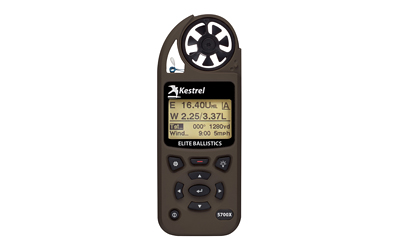
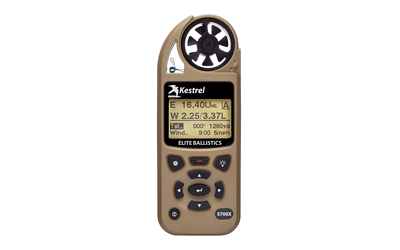
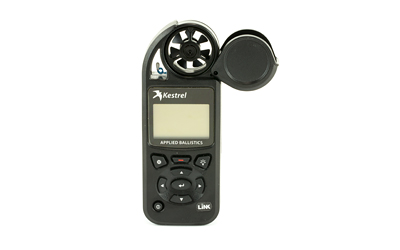
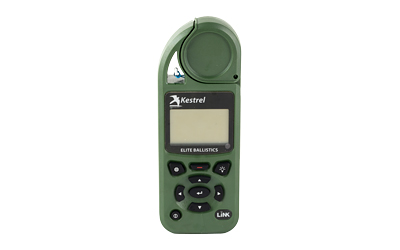
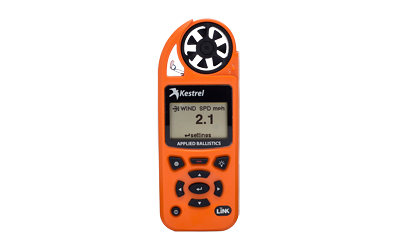
These units have the ballistic profile of your rifle and ammunition programmed in (either from a built-in library or via Bluetooth sync with an app). They take the measured distance and angle, account for current atmospheric conditions via onboard sensors, and output a direct hold or dial value. Some integrate directly with Kestrel devices via Bluetooth for real-time atmospheric data. A few high-end units also incorporate wind measurement.
The key technical distinction here is that these systems multiply the cosine by the bullet drop for your specific load at that distance — the mathematically correct calculation — rather than applying it to the range. This eliminates the overcompensation error of the Rifleman's Rule at long range and steep angles.
The tradeoff is cost, complexity, and the requirement to keep the ballistic profile current. If you change loads or zero, the profile has to be updated. And these units still require the shooter to understand what the system is doing — a ballistic rangefinder in the hands of someone who doesn't understand the inputs is a false confidence generator.
For long range hunters and precision shooters taking shots past 500 yards in significant terrain, the step up to a true ballistic rangefinder is a meaningful one. For hunters making ethical shots inside 400 yards in moderate terrain, HCD mode from a quality mid-range unit covers the problem well.
Features worth understanding when buying
First target vs. last target priority. In dense brush or timber, the rangefinder may pick up intervening foliage before it reaches the target. First target priority returns the reading from the closest object — useful in brush. Last target priority returns the farthest reading — more useful for ranging an animal through scattered vegetation. Knowing which mode your unit defaults to, and how to switch it, avoids frustrating field situations where you're ranging a branch in front of your target.
Scan mode. Allows continuous ranging while sweeping — useful for ranging moving animals or confirming distance while panning across terrain. Drains battery faster but operationally valuable.
Display brightness and readability. Easy to overlook in a store but critical in the field. An LRF display that washes out in bright sunlight or is hard to read in low light is a genuine problem when you have seconds to get a number and make a shot.
Magnification and optical quality. Most hunting rangefinders are 6x or 7x. The optics matter — you need to be able to identify the target clearly through the unit to range the right thing. Low-quality glass that makes precise target identification difficult defeats the purpose.
Size and weight. A rangefinder you leave in your pack because it's too heavy or bulky to carry isn't doing you any good. For backcountry hunting, this is a real constraint.
The practical summary
The rangefinder on a spec sheet and the rangefinder in the field are two different devices. Buy based on the deer or non-reflective range figure if hunting is the primary use. Understand that small steel at long range is a harder target than its reflectivity suggests. Know what mode your unit defaults to for angle compensation and whether that mode's accuracy is appropriate for your actual shooting distances and terrain.
For most hunters and long range shooters working inside 500 yards in moderate terrain, a quality mid-tier unit with HCD mode is entirely adequate. Once shots push past 500 yards, steep angles are common, or the application demands precise wind holds, the workflow changes — and a unit that outputs true LOS distance with angle, or a full ballistic solver, becomes the right tool.
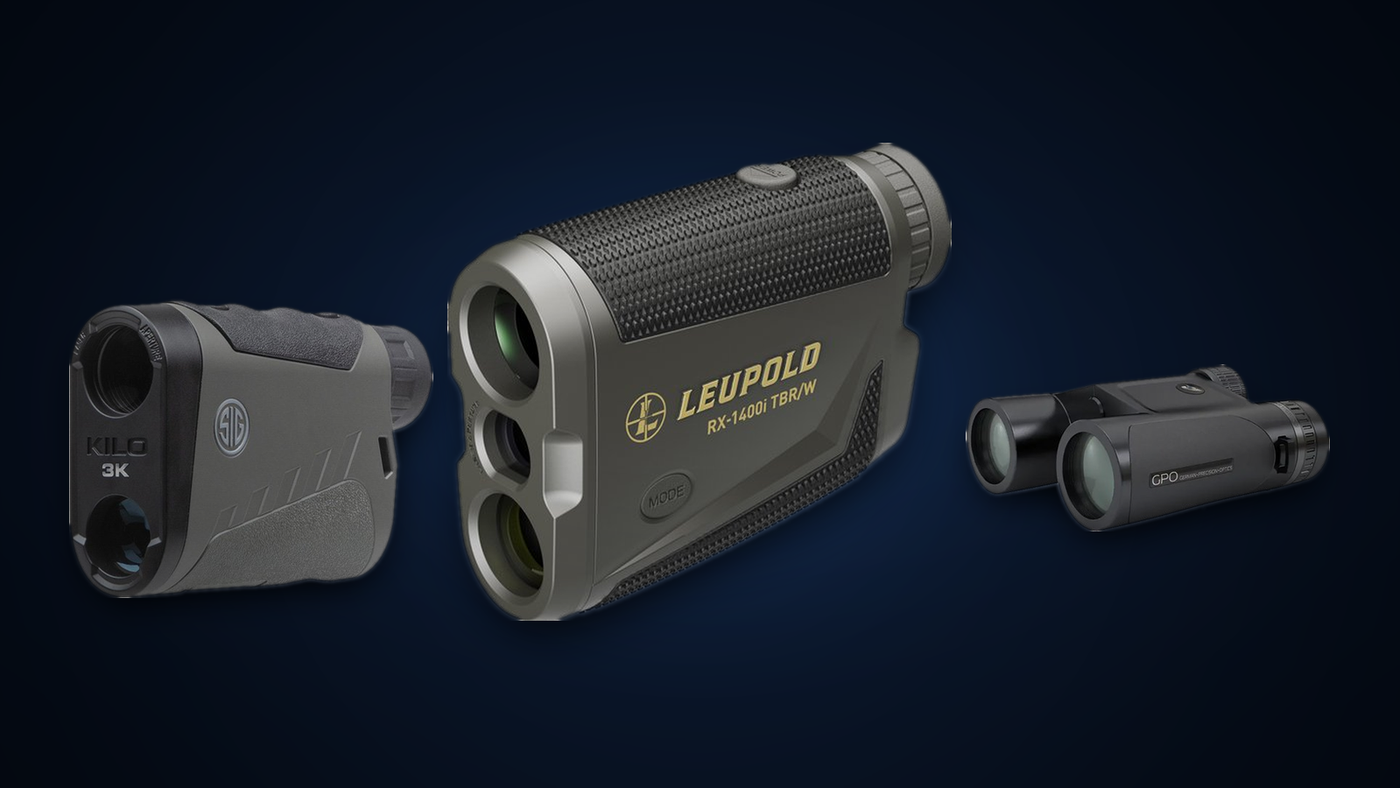
Choosing the right rangefinder depends heavily on your specific use case — the distances you shoot, the terrain you hunt, and whether you're running a ballistic solver. It's worth a conversation before you buy. HildiTech carries a curated selection of rangefinders from entry-level to full ballistic units.