Angle-Compensating Rangefinders Explained: Why Raw Distance Isn't Always What You Need
A rangefinder gives you a number. On flat ground, that number is all you need. The moment terrain angles into the picture — a steep mountain shot, a treestand looking down at a deer, a canyon shot from a ridge — that number becomes misleading. Here's why, and what angle compensation actually does about it.
The problem with slant range
When you range a target on a slope, the rangefinder measures the straight-line distance between you and the target — the hypotenuse of a right triangle. That's called slant range, or line-of-sight distance.
Gravity doesn't work along that diagonal line. It works straight down, perpendicular to the earth. A bullet fired uphill or downhill at an angle is only fighting gravity across the horizontal component of that shot — the base of the triangle, not the hypotenuse.
This means the ballistic challenge of the shot corresponds to a shorter distance than the rangefinder displays. Dial your scope or apply your holdover for the full slant range and you'll shoot high — sometimes significantly so.
How much does it matter? At mild angles and moderate distances, not much. At steep angles and long distances, enough to miss clean or worse. A 400-yard shot at a 30-degree downhill angle has a horizontal component of roughly 346 yards. That's a 54-yard discrepancy — and at 400 yards, shooting for 400 when you should hold for 346 produces a hit that's several inches high. On a mountain elk at distance, that's the difference between a clean kill and a wounded animal.
When angle shots are unavoidable
Flat-ground shooting is a range luxury. Real-world environments produce angle shots constantly:
Mountain hunting is the environment where this matters most. Hunters pursuing elk, mule deer, mountain goats, and sheep regularly face shots across canyon walls, up steep faces, and down from ridges. Angles of 20, 30, even 40+ degrees are common. At these angles and at the distances mountain hunting often demands, ignoring compensation is not a minor error.
Treestand and elevated blind hunting produces consistent downward angles, typically 15–30 degrees depending on stand height and shot distance. A whitetail hunter in a 20-foot stand ranging a deer at 40 yards isn't dealing with a large error — but at 60–80 yards from a high stand, the angle becomes worth accounting for. Many treestand misses and poor hits trace back to this exact problem.
Ridge and elevated position shooting at long range steel or in competition produces similar geometry. PRS and long range competition frequently involves positional shooting from elevated structures or natural terrain features where the target is significantly below or above the shooter. Getting the compensation right is part of the stage.
Canyon and canyon rim shooting — common in the American West for predator and varmint hunting — often puts the shooter above the target at significant angles. A coyote across a canyon at 300 yards and 25 degrees down is a very different ballistic problem than a 300-yard flat shot.
What angle-compensating rangefinders do
An angle-compensating rangefinder adds an inclinometer — an angle sensor — to the standard ranging hardware. It measures both the slant range and the angle simultaneously, then applies a correction to give you a more useful number for making the shot.
The corrected number is typically called the Horizontal Component of Distance (HCD) or Angle Modified Range (AMR) depending on the manufacturer — different labels for the same concept. It represents the effective flat-ground distance your ballistic solution should be based on.
Most units display both the raw slant range and the compensated distance, so you can see both. You use the compensated number for your elevation correction and the raw slant range as reference for wind — because the bullet travels the full slant distance through the air, and wind acts on it across that entire path.
The math behind basic HCD is straightforward: slant range multiplied by the cosine of the angle. At 30 degrees, cosine is 0.866 — so a 400-yard slant range produces an HCD of about 346 yards. The rangefinder does this automatically and displays the result instantly.
For hunting at typical field distances — shots inside 400–500 yards at angles up to about 30 degrees — this correction is accurate enough to matter and simple enough to use in the field. You range, you get a compensated number, you use it. Clean and fast.
At longer distances and steeper angles, the simple cosine correction starts to introduce small errors because it applies the correction to the distance rather than to the bullet drop — and bullet drop isn't linear with distance. For precision long range work past 500 yards or at angles steeper than 30 degrees, a full ballistic solver is the more accurate tool. We cover the technical details of all the angle compensation methods — from basic HCD to full ballistic solver integration — in our laser rangefinder basics article.
Uphill vs. downhill: does the direction matter?
This is one of the most common misconceptions about angle compensation. Intuitively, many shooters assume uphill shots require more hold and downhill shots require less. The reality is that both uphill and downhill shots require less hold than the equivalent flat-ground distance — and by approximately the same amount at the same angle.
The physics: gravity reduces the bullet's velocity in the horizontal plane less on an angled shot than on a flat shot of equivalent slant range, regardless of whether the angle is up or down. The error from using uncorrected slant range goes in the same direction — shooting high — whether you're angled up or down. A 30-degree uphill shot and a 30-degree downhill shot at the same slant range require nearly identical compensation.
Angle-compensating rangefinders handle this correctly without any input from the shooter — you point, range, and the unit gives you the compensated distance whether the target is above or below you.
Choosing a rangefinder with angle compensation
Angle compensation has become standard on most quality hunting and shooting rangefinders — it's no longer a premium-only feature. What varies between units is how the compensation is implemented and displayed, and how well the unit performs on the ranging side (which matters regardless of compensation).
Things worth confirming when evaluating a unit:
Does it display both slant range and HCD simultaneously? Some budget units only display one at a time, requiring a mode switch. For field use you want both visible at once.
Does it display the angle in degrees? Useful for feeding into a ballistic solver or for understanding the shot geometry.
Is the angle sensor accurate at steep angles? Most inclinometers are accurate across a wide range, but some budget units become less reliable past 45 degrees. For mountain hunting where extreme angles are possible, this is worth verifying.
Does the ranging performance match the use case? Angle compensation is only useful if the unit can actually range the target reliably. Deer-range figures, beam divergence, and performance in low light matter independently of the compensation feature — don't let a strong compensation implementation distract from the core ranging capability. Our rangefinder basics article covers what determines real-world ranging performance in detail.
The practical upshot
If you shoot or hunt on anything other than flat ground, an angle-compensating rangefinder is not a luxury — it's the correct tool for the job. Raw slant range will lead you to shoot high on every significant angle shot, consistently, by a predictable amount. Angle compensation removes that error automatically.
For treestand hunters it closes a gap that causes more poor hits than most hunters realize. For mountain hunters it's a fundamental part of making ethical shots at the distances mountain hunting demands. For long range shooters it's part of the input chain that produces accurate first-round solutions.
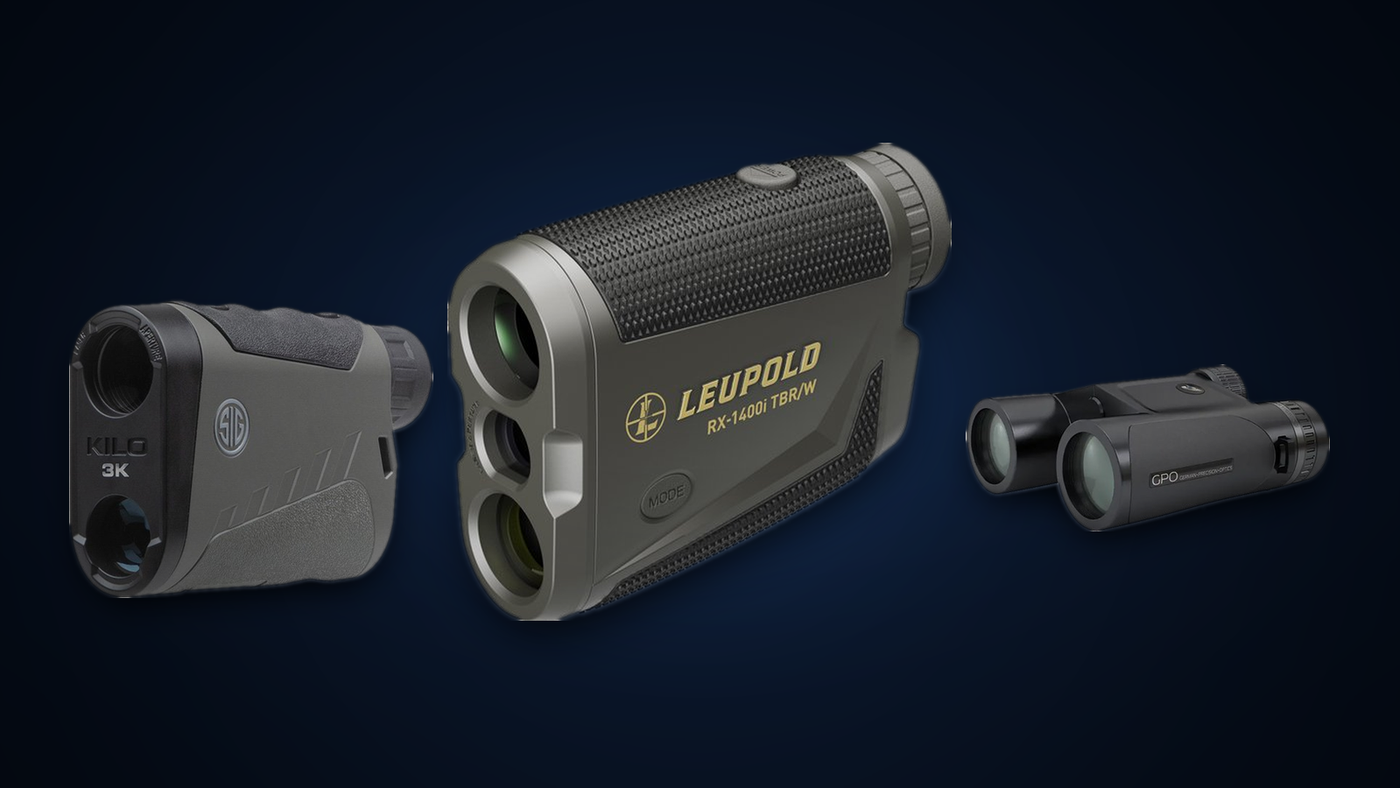
HildiTech carries rangefinders with angle compensation across a range of price points and capability levels — from hunting-focused units built for fast field use to advanced models that feed directly into ballistic solvers.