Directional Audio in Electronic Earmuffs: Why It Matters for Situational Awareness
Electronic hearing protection has largely replaced passive protection for serious shooters and hunters — and for good reason. But not all electronic muffs are equal. The feature that separates genuinely useful electronic protection from a basic upgrade over foam plugs is directional audio. Here's what it is, how it works, and why it matters depending on how you use your hearing protection.
A quick recap: how electronic muffs work
Electronic earmuffs use external microphones to pick up ambient sound, process it, and play it back through internal speakers — passing through sounds below a set threshold (typically 82–85 dB) while suppressing anything above it, like a gunshot. The result is that you hear normal conversation and environmental sounds clearly while the shot is automatically blocked.
We cover the full breakdown of electronic vs. passive hearing protection in our electronic hearing protection article. The short version: for anyone who shoots or hunts seriously, electronic muffs are the correct tool. This article focuses on one specific capability within that category — directional audio — and why it's worth understanding before buying.
What directional audio actually means
A basic electronic earmuff has one microphone — typically centered on one cup or shared between both cups — feeding one or two speakers in mono. You hear ambient sound, but everything arrives at the same volume in both ears regardless of which direction it's coming from. Left, right, in front, behind — the audio experience is flat and undifferentiated.
Directional audio means the muff has separate microphones on each ear cup, each feeding the speaker on that same side independently. The left microphone feeds the left speaker; the right microphone feeds the right speaker. The result is stereo ambient sound that preserves the spatial information of the original acoustic environment.
Your brain is extraordinarily good at using tiny timing and volume differences between your two ears to determine where sounds are coming from. That's how you locate a sound without looking at it — the ear closer to the source hears it fractionally sooner and fractionally louder, and your auditory cortex processes that difference into a location. Directional electronic muffs preserve this information. Mono muffs strip it out entirely.
Why it matters: application by application
Hunting
This is where directional audio has the most obvious and immediate operational value.
Locating game by sound is a fundamental hunting skill. The snap of a twig, the rustle of brush, the soft footfall of a deer working through dry leaves, the distant bugle of a bull elk — all of these are directional cues that experienced hunters rely on to locate animals before they can see them. In a mono electronic muff, you hear the sound but lose the spatial information that tells you which direction to look. In a directional muff, you hear the sound the way your bare ears would — and you look the right direction.
This matters even more in dense cover or timber where you often hear an animal long before you see it. The directional cue gives you time to orient, raise your rifle, and be ready before the animal steps into a shooting lane. In a mono muff, you hear something and scan — a slower, less certain process.
For turkey hunting, where locating a bird by its gobble and setting up in the right position is the entire game, directional audio is arguably a functional necessity rather than a nice-to-have.
For predator hunting where you're calling and listening for an animal working toward you from downwind, knowing whether the sound is coming from the left, right, or directly ahead informs whether to move, hold, or prepare for a shot.
Tactical and home defense
In a defensive scenario — a home intrusion, a dynamic environment where you're trying to understand what's happening around you — knowing where sounds are coming from is the difference between an informed response and guessing. Footsteps in a hallway, a door opening, movement in an adjacent room — all of these are directional cues that determine how you respond and where you move.
Directional audio preserves your ability to build a mental map of what's happening around you while your hearing is protected from the shot itself. Mono audio gives you sound but not location, which is significantly less useful in a situation where spatial awareness determines your decisions.
Law enforcement and military users have used directional electronic protection as standard for years for exactly this reason. The situational awareness advantage in dynamic environments is not subtle — it's a fundamental operational difference.
Range use and training
At a shooting range, directional audio is less operationally critical but still meaningfully useful. Hearing range commands, locating where a voice is coming from on a busy range, identifying which direction an instructor is speaking from in a multi-bay environment — these are all easier with directional audio than mono.
In a formal training course where an instructor is moving around behind a line of shooters, directional audio means you can locate where your instructor is and whether they're addressing you without looking away from your target or removing your muffs. Mono audio means you hear a voice but can't immediately tell where it's coming from.
For competitive shooting where you're in a stage and the range officer is giving commands, directional audio helps you process commands faster and with less cognitive effort.
Mono electronic vs. directional electronic: what the spec means
When evaluating electronic earmuffs, the microphone configuration is the key spec to look for. Products may describe it as:
- Two microphones / dual microphone — does not automatically mean directional. Some dual-mic designs use both microphones to feed a single mono output for better sound pickup, not stereo separation. Check whether the output is stereo.
- Stereo — the term that actually confirms directional audio. Stereo means left and right channels are independent.
- 4-microphone designs — some premium units use two microphones per cup (four total) for better wind noise rejection and wider soundstage while maintaining full directional stereo. This is the top end of the category.
When product listings are ambiguous, look for "stereo" specifically rather than assuming dual microphones means directional output.
Cost comparison across protection types
Understanding where directional electronic muffs fit in the cost landscape helps set realistic expectations:
Passive protection (foam plugs, non-electronic muffs): $5–50. Protects hearing, blocks everything equally, no electronics. The baseline.
Basic electronic muffs (mono, single microphone): $30–100. Adds electronic sound pass-through and shot suppression over passive. Hearing conversation is possible; directional awareness is not preserved.
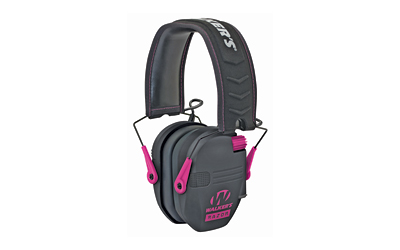
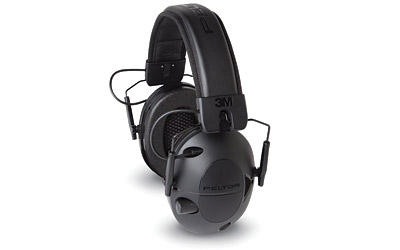
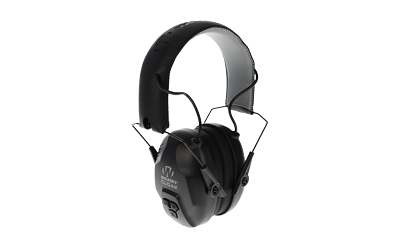
Mid-tier electronic muffs (stereo, directional): $100–200. This is where genuine directional audio becomes available. Units in this range from established manufacturers (Howard Leight Impact Pro, Peltor Sport Tactical, Walker's Razor Slim) deliver real stereo separation and meaningful directional awareness. A solid choice for most range and hunting applications.
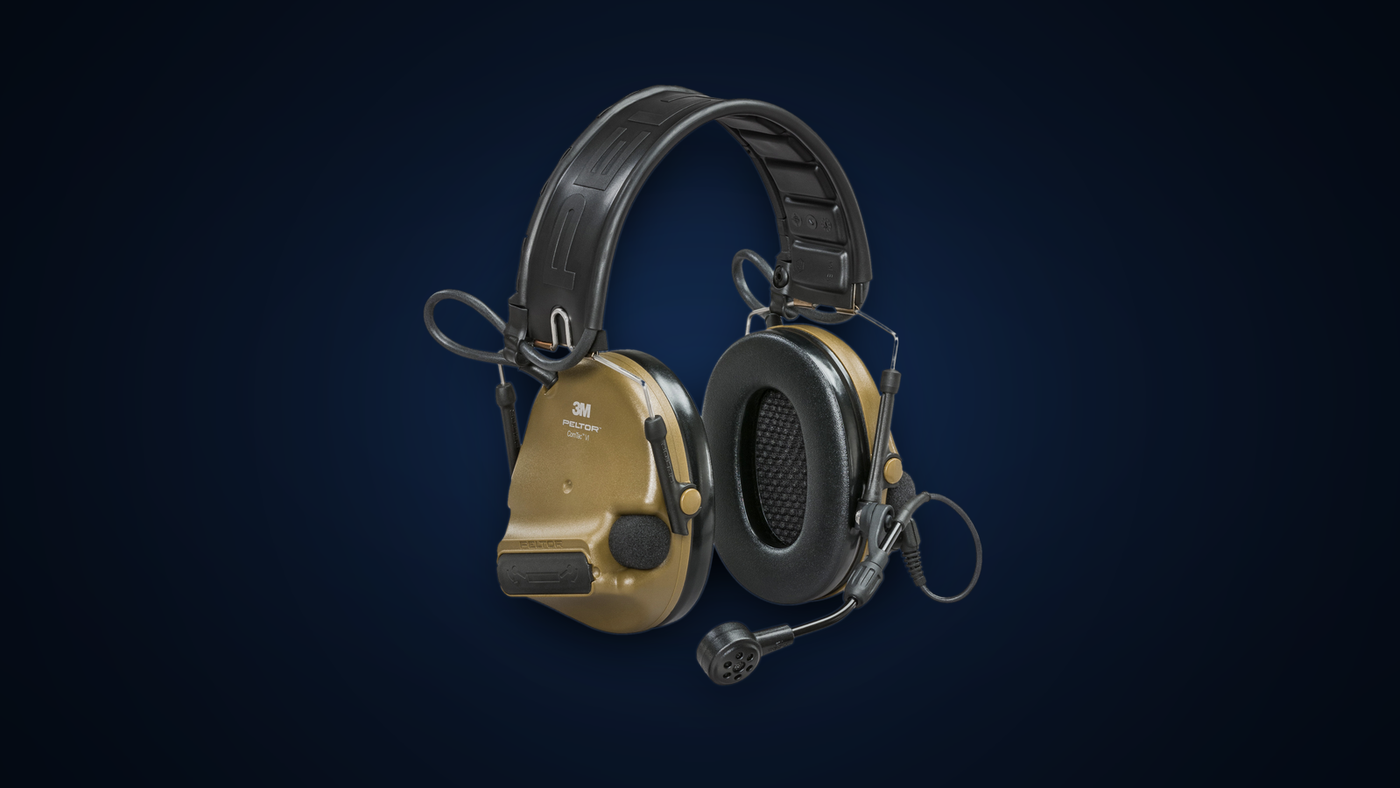
Premium directional electronic muffs: $200–500+. Improved amplification quality, better dynamic compression, faster attack and release times, cleaner audio reproduction, better wind noise rejection, and in some cases four-microphone designs for wider and more accurate soundstage. Brands like Peltor (3M), MSA Sordin, and Ops-Core serve this tier. The performance difference over mid-tier is real and meaningful for professional and demanding use, though mid-tier covers most civilian applications well.
The relevant comparison for most buyers: the step from passive ($20–50) to basic mono electronic ($50–100) is significant. The step from basic mono electronic to directional stereo ($100–200) adds situational awareness capability that passive and mono electronic simply cannot provide. For hunters and anyone in environments where locating sounds matters, the directional tier is the correct entry point — not a luxury upgrade from adequate protection.
What else to look for alongside directional audio
Directional audio is the key differentiator, but a few other specs matter when comparing units at the same price tier:
Amplification quality: Cheap electronics amplify background hiss alongside ambient sound. Quality units produce clean, natural-sounding ambient audio. Listen to demo comparisons if possible before buying — the difference between clean and hissy amplification is immediately obvious.
Maximum ambient output cap: Should be 82 dB or below. The muff is amplifying sounds up to this threshold and then blocking anything above. Higher caps mean the shot suppression activates at a louder point, which may not be appropriate.
Attack time: How fast the circuit suppresses the loud sound. Premium units are faster, meaning less of the impulse reaches the speaker before suppression kicks in.
Low-profile design: Relevant for rifle shooters where a large earcup can interfere with cheek weld on a stock. Several directional muff designs offer slimmer profiles specifically for this reason.
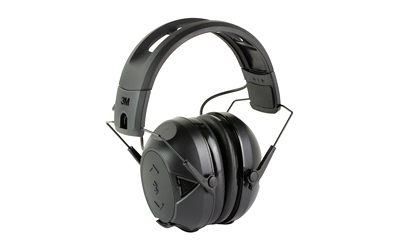
Bluetooth connectivity: Some premium units add Bluetooth for connecting to phones, radios, or communication systems. Useful for certain professional and competition applications.
Battery type and runtime: AA batteries are convenient and universally available in the field. Proprietary rechargeable batteries are more convenient at home but create dependency. For hunting where you're away from power for days, AA is the practical choice.
The bottom line
Passive protection blocks everything. Basic mono electronic protection lets you hear — but flattens the spatial information that makes hearing operationally useful. Directional stereo electronic protection is what actually gives you your hearing back while protecting it.
For anyone using hearing protection in an environment where knowing where sounds are coming from matters — hunting being the most obvious example, but tactical and training applications as well — directional audio is not a premium feature to consider. It's the baseline capability you should be buying toward.
HildiTech carries electronic hearing protection with directional audio across a range of use cases and price points. If you want to understand which unit fits your specific application, we're set up to help.