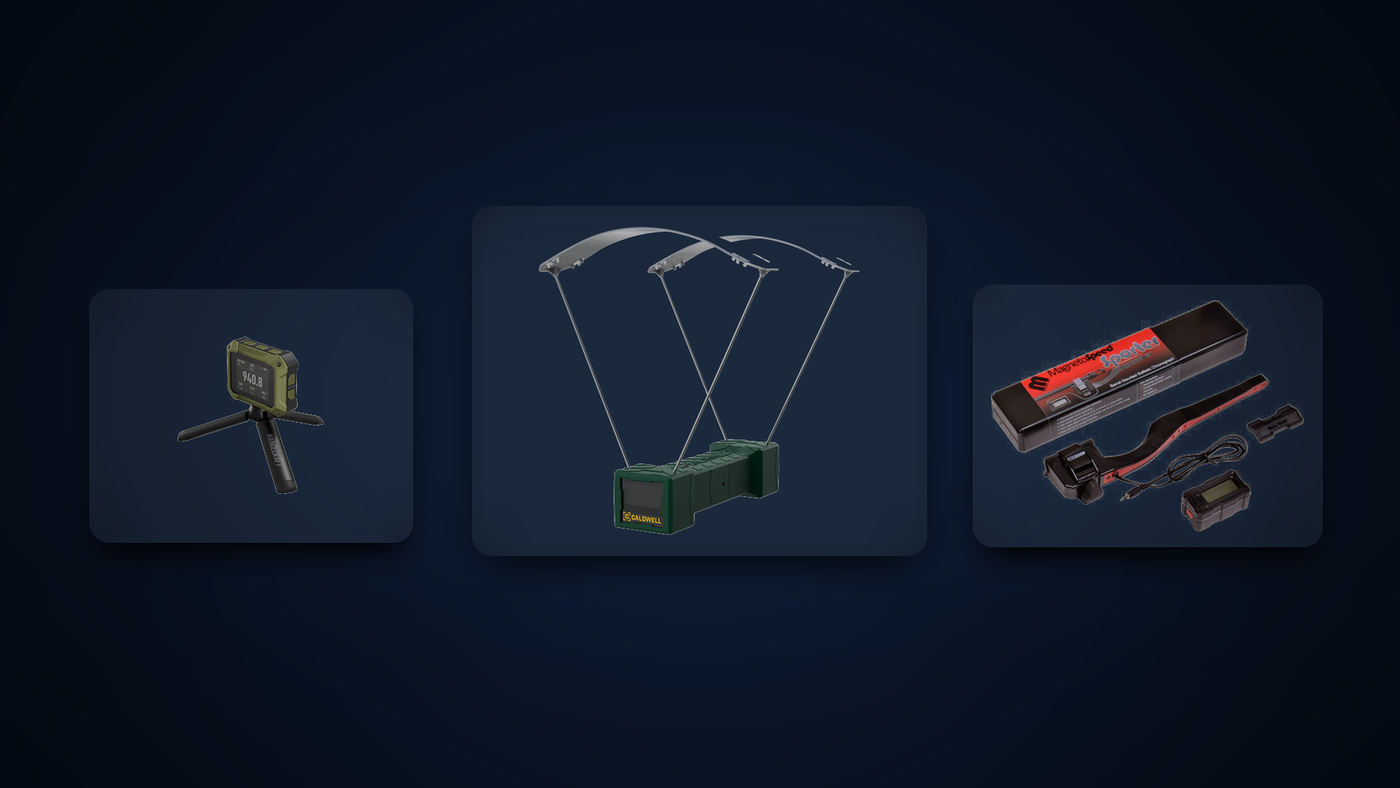
Chronograph Comparison: Traditional Optical, Barrel-Mounted, and Doppler Radar
A chronograph is one of those tools that seems like a luxury until you start developing loads or diagnosing inconsistent groups — then it becomes indispensable. Knowing your muzzle velocity isn't just satisfying data; it's the foundation of an accurate ballistic solution, the diagnostic that tells you whether your loads are consistent, and the measurement that connects your handloads to real-world performance. But not all chronographs work the same way, and the three main types each have distinct tradeoffs in setup, accuracy, connectivity, and what they'll work with. Here's a straight comparison of the three types we carry.
The three technologies
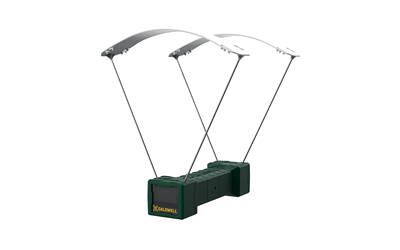
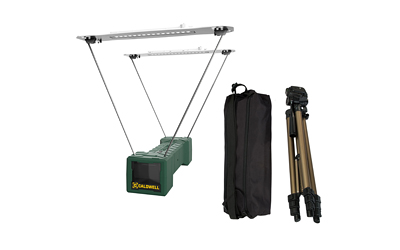
Traditional optical chronograph (Caldwell)
The traditional skyscreen chronograph is the oldest and most common design. It works by measuring the time it takes a bullet to travel between two optical sensors — the skyscreens — placed a fixed distance apart (typically 12–24 inches). The sensors detect the shadow of the bullet passing overhead, the unit measures the elapsed time to microsecond precision, and calculates velocity from the known distance between sensors.
The physics are simple and well-understood. Done correctly, the measurement is accurate and reliable. Traditional optical chronographs have been the standard for reloaders and ballisticians for decades for this reason.
Barrel-mounted chronograph (MagnetoSpeed)
MagnetoSpeed uses a fundamentally different approach. A bayonet assembly attaches directly to the barrel, with sensor probes positioned ahead of the muzzle. As the bullet exits the barrel, it passes through two magnetic fields generated by the sensors. The unit measures the time between the bullet crossing each field and calculates velocity from the known distance between sensors — similar in principle to optical but using magnetic field detection instead of light.
The entire measurement happens at the muzzle, attached to the rifle, with no downrange equipment required.
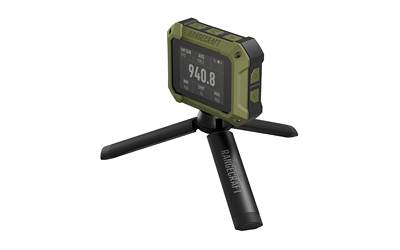
Doppler radar chronograph (Athlon Rangecraft Velocity Pro)
The Athlon Rangecraft uses Doppler radar — the same principle used in weather radar and police speed guns — to measure bullet velocity. The unit sits beside the shooter, typically 4–10 inches from the muzzle and offset to the side. It emits a radar frequency that bounces off the base of the bullet and returns to the unit. The difference between the transmitted and received frequency is proportional to the bullet's speed, which the unit calculates in real time.
No contact with the firearm, no downrange equipment, no skyscreens, no line-of-sight requirement through which the bullet must pass.
Setup and ease of use
Caldwell optical
Setup is the biggest practical limitation of traditional optical chronographs. The skyscreens must be positioned at a fixed, measured distance apart on a tripod or mounting system, positioned downrange from the muzzle, aligned so the bullet passes over both sensors, and placed where lighting is adequate and consistent.
That last point is important: optical chronographs depend on the contrast between the bullet's shadow and the background sky or diffuser screens. Direct sun, low sun angles, shade, and overcast conditions all affect reliability. Many traditional chronographs come with diffuser screens to improve consistency in variable light, but positioning them correctly adds setup time. Shooting indoors requires artificial lighting positioned over the sensors — a setup consideration that can be awkward at some ranges.
Getting a consistent shooting position relative to the sensors matters too. Shots fired too low or too high relative to the sensor plane can produce missed readings or false triggers.
Setup time: typically 5–10 minutes for a practiced user. More for new users learning sensor spacing and alignment.
MagnetoSpeed
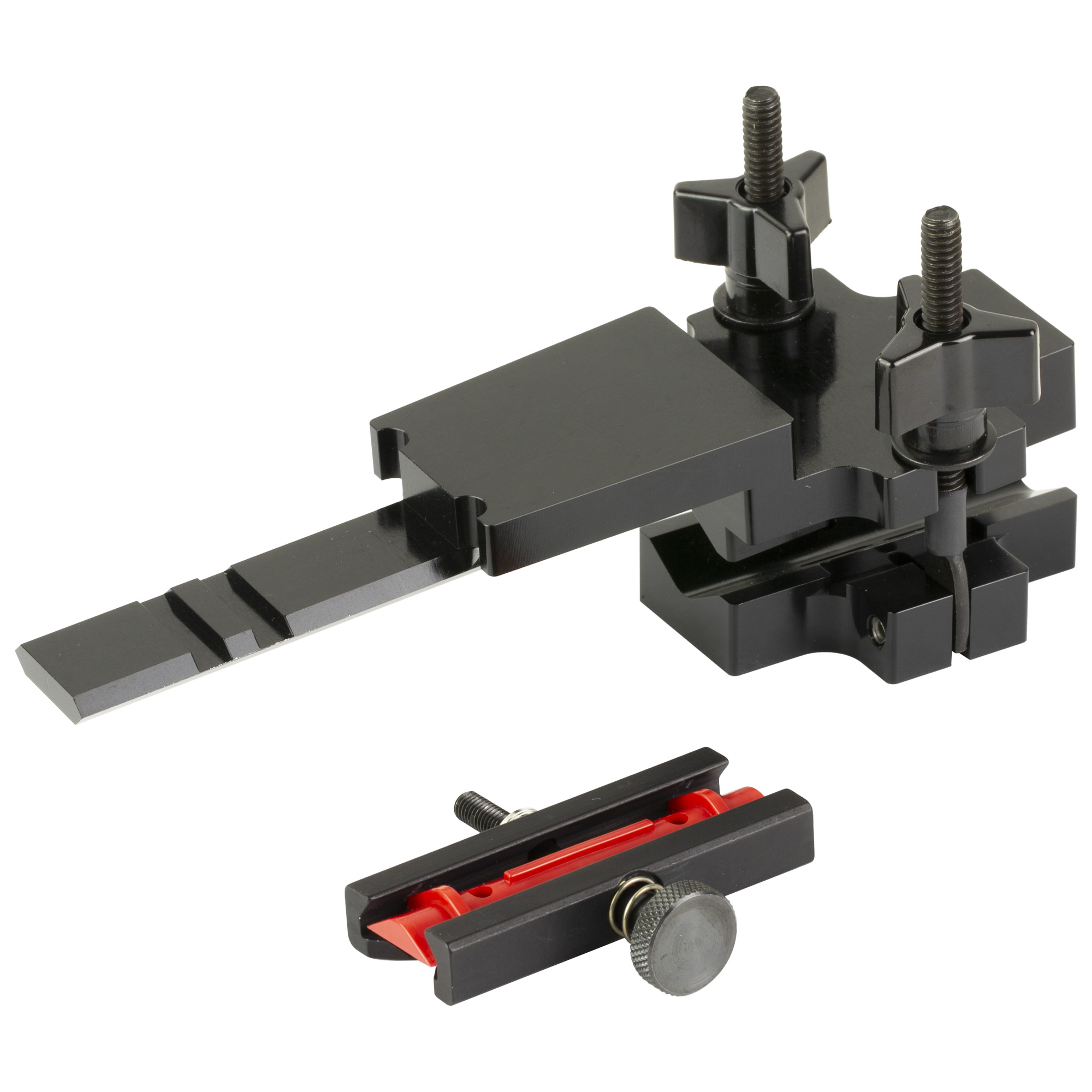
Setup is faster than traditional optical but involves attaching hardware to the rifle. The bayonet clamps around the barrel, the spacer is selected for the correct barrel diameter, and the sensor probes position themselves ahead of the muzzle. A short cable connects to the display unit that typically attaches to the rifle or sits adjacent.
Setup once you know the system is 2–3 minutes. The process is repeatable and doesn't depend on lighting, downrange positioning, or ambient conditions at all. Indoor or outdoor, day or night — setup is the same.
The consideration is that it must be removed and reinstalled for each rifle, and the correct spacer must be on hand for different barrel profiles. Building a collection of spacers covers most barrel diameters.
Athlon Rangecraft doppler
Setup is the fastest of the three by a significant margin. Place the unit on its included tripod 4–10 inches from the muzzle and 4–10 inches to the side, power it on, and shoot. That's it. No sensors to align, no skyscreens to position, no light to worry about, no barrel attachment. The unit works in any lighting condition, indoors or outdoors, day or night.
Compact at 3.5" long and 4.7 ounces, the Rangecraft travels easily and deploys in under a minute. For range sessions where you want data without setup overhead, it's the clear leader.
Accuracy and data output
All three types are accurate enough for practical reloading and ballistic work when used correctly. The differences are in what can go wrong and what data they produce.
Caldwell optical
Accuracy is reliable when conditions are right — consistent lighting, correct sensor spacing, bullet passing cleanly over both sensors. When conditions are marginal — variable lighting, inconsistent sensor height relative to shot placement, reflections or shadows triggering the sensors — missed readings and false readings increase.
The Caldwell provides velocity per shot and typically calculates average velocity, standard deviation (SD), and extreme spread (ES) across a string. These are the core metrics for evaluating load consistency. Standard deviation measures shot-to-shot variation; extreme spread measures the gap between the fastest and slowest shot in a string. A load with low SD and low ES is consistent; high SD and ES indicate a load with problematic variation that will affect group size at distance.
MagnetoSpeed
Accuracy is consistently high because the measurement happens in a controlled, attached environment with no lighting variables and no alignment concerns. The sensors are at fixed positions relative to the muzzle; every shot passes through the same field geometry.
The data output is similar to optical — velocity, average, SD, ES per string. The V3 model adds Bluetooth connectivity and app integration. Data can be exported for analysis.
One important consideration: the MagnetoSpeed bayonet attached to the barrel changes the barrel's harmonic behavior. The added weight and contact point shifts where the barrel vibrates during the shot, which can move the point of impact. Groups shot with a MagnetoSpeed attached may not represent the rifle's unloaded accuracy — this matters when using the chronograph alongside load development accuracy testing at the same session. The solution is to either test velocity separately from accuracy, or accept that accuracy testing requires a separate session without the unit attached.
Athlon Rangecraft doppler
The Rangecraft measures velocities from 65 to 5,000 FPS at ±0.1% accuracy. Doppler radar measures the bullet's actual velocity in flight rather than timing between fixed points, which produces consistent readings regardless of bullet profile, caliber, or muzzle device.
A specific advantage: because the Rangecraft doesn't rely on muzzle blast to trigger, it reliably captures shots from suppressed rifles and firearms with muzzle brakes or compensators — devices that can confuse optical sensors or require special positioning. Traditional optical chronographs can misfire or miss readings with muzzle devices that produce large blast signatures; the Athlon handles them without adjustment.
Data output includes velocity, average, SD, extreme spread, kinetic energy, and power factor per string — a complete set of metrics for both reloaders and competitive shooters who need power factor calculations for division compliance.
Connectivity and record keeping
This is where the three types diverge most significantly for serious data users.
Caldwell optical
The entry-level Caldwell units display data on a small screen and have limited or no connectivity. Data must be manually recorded. Some mid-tier and higher Caldwell models add Bluetooth app connectivity with the Caldwell Ballistic Precision app, which allows shot-by-shot data logging, session history, and export. If record keeping and load development tracking matter to you, verify that the specific Caldwell model you're considering has app connectivity — not all do.
For reloaders doing load development across multiple sessions and variables (powder charge, bullet seating depth, primer brand), manual recording is workable but tedious. App connectivity and export to a spreadsheet is significantly more useful.
MagnetoSpeed
The MagnetoSpeed V3 includes Bluetooth and pairs with the MagnetoSpeed app for iOS and Android. Shot strings are logged by session, data exports to CSV for spreadsheet analysis, and the app provides session history. For serious load development work, the MagnetoSpeed's app integration is well-regarded and mature — the product has been on the market long enough that the software is refined.
Athlon Rangecraft
The Rangecraft stores up to 50 sessions with 100 shots each on-device — enough for extensive range sessions without needing to clear data. Bluetooth Low Energy connectivity pairs with the Athlon Ballistics Lite app on iOS and Android, enabling shot tagging, session export to CSV, and long-term tracking of performance metrics.
The on-device display shows average velocity, SD, extreme spread, energy, and power factor without requiring the phone. The app extends this with session history, graphing, and export. A noted app update adds shot string visualization as a line graph — useful for identifying velocity plateaus in load development and spotting outlier shots visually.
One user-noted limitation: the current app is designed with factory ammunition in mind and lacks fields for detailed handload variables (powder type, charge weight, COAL, primer, etc.). For reloaders who want to log those variables alongside velocity data, a supplemental spreadsheet or reloading log remains necessary. This is a software limitation that may improve with future updates rather than a hardware issue.
Usage limitations
Caldwell optical
- Requires consistent lighting — direct sun, low-angle sun, and indoor ranges without diffuser lighting reduce reliability
- Bullet must pass over both sensors within the detection zone — shots fired very high or low relative to sensor height can miss
- Muzzle devices (brakes, compensators) producing large blast signatures can trigger the sensors prematurely — requires careful positioning
- Suppressors are generally compatible since blast is reduced, though very close muzzle placement can still cause issues
- Setup time and downrange positioning can be inconvenient at busy ranges where downrange access is limited or prohibited
MagnetoSpeed
- Must be attached and removed for each firearm — collecting spacers for multiple barrel profiles is necessary for a multi-rifle setup
- Barrel harmonic effect — attached weight changes point of impact, so accuracy and velocity testing cannot happen simultaneously without accepting that the accuracy data is altered
- Not compatible with bull barrels or barrels with certain profile transitions that the bayonet cannot clamp around — check barrel diameter compatibility before purchase
- Not practical for pistols or firearms where barrel access for the bayonet is not possible (bullpup configurations, some semi-auto pistol platforms)
- The display unit dangling from the rifle during shooting can be slightly awkward for some users, though most adapt quickly
Athlon Rangecraft
- Must be positioned correctly relative to the muzzle — 4–10 inches from the muzzle and offset to the side. Placement outside this range reduces accuracy. At very busy ranges with multiple adjacent shooters, neighboring shots can occasionally register — the unit has been engineered to track the correct bullet in multi-shooter environments, but positioning and awareness still matter
- Operating temperature range of 14°F to 122°F — cold weather use below 14°F is outside spec, though most shooting conditions fall within range
- App software lacks detailed handload variable logging — supplemental record keeping needed for serious reloaders tracking multiple variables
- Not rated for direct weapon-mounted use — rigid attachment to the firearm would transfer recoil directly into the unit and could affect sensor calibration
Pricing
Caldwell optical chronographs are the most affordable entry point in the category. Entry-level units with basic display and no connectivity run $60–100. Mid-tier models with Bluetooth app connectivity run $150–250. For a reloader who wants accurate velocity data with minimal investment, the Caldwell is the accessible choice.
MagnetoSpeed V3 runs approximately $300–350. The price reflects the barrel-mounted design, Bluetooth connectivity, and the refined software ecosystem. Spacer sets for multiple barrel profiles add a modest additional cost.
Athlon Rangecraft Velocity Pro is priced around $400 street price — roughly $100 less than the comparable Garmin Xero C1 while delivering similar doppler radar capability. For the convenience, weather resistance (IP67 rated), suppressor compatibility, and no-setup workflow, this represents strong value in the doppler category.
Which one for which shooter
The Caldwell optical is the right choice if:
- Budget is the primary constraint
- You shoot in consistent lighting conditions or are willing to manage diffuser screens
- You don't need suppressor or muzzle brake compatibility
- Basic data display is sufficient and connectivity is secondary
The MagnetoSpeed is the right choice if:
- You want barrel-mount simplicity without lighting dependencies
- You primarily work with one or two rifles with known barrel profiles
- Accuracy and consistency of measurement is the top priority and you're willing to do velocity and accuracy testing in separate sessions
- The app ecosystem and CSV export matter for detailed load development tracking
The Athlon Rangecraft is the right choice if:
- Fast, minimal-setup data collection is the priority
- You shoot suppressed or run muzzle brakes or compensators
- You want a single unit that works across all firearms without attachment or adjustment
- Weather resistance and portability matter — range bag deployment in any conditions
- You want the best connectivity and on-device data display at a competitive price point
All three types fill a real role in a shooter's toolkit — the right choice depends on how you work at the range, what firearms you're testing, and what you do with the data. HildiTech carries the Caldwell, MagnetoSpeed, and Athlon Rangecraft Velocity Pro across all three categories.